Find one of the largest information about Styling Cars, to increase your Styling Cars here

Friday, April 3, 2009

The AMC Gremlin and the wonderfully odd legacy of AMC, and designer Richard Teague.

The AMC Gremlin

With the exclusion of the Vega, the Gremlin is a car that unfairly comes to mind when descriptions of “bad cars” of the 70’s are mentioned. In reality the Gremlins unusual design is actually a success story of an innovative and resourceful small company using great design to bring a original car to production. To understand how the Gremlin came to be, and why it came to look like it did, it’s important to understand a bit of history of AMC and its most prolific chief designer, Richard Teague.

Famed AMC designer, Richard Teague

AMC came about from the last vestiges of heavily in debt, Nash-Kelvinator Corporation and the Hudson Motor Car Company. Formed in 1954, the hope was a merger would put them in a more competitive position with Chrysler, Ford and GM.

AMC president George W. Romney focused the company’s line up on compact cars like the Rambler & Nash Metropolitan; this in the mid-50’s when the big three were cranking out ever larger behemoths. American Motors planned on a future of smaller, fuel efficient vehicles long before most Americans saw the need. By refusing to follow the big three in the model year restyling game, and reaping the savings by avoiding retooling costs, AMC raised themselves out of the basement and became profitable. And although the Rambler took most of its styling cues from bits and pieces of the worst the Big Three had to offer, and never changing them (it won no awards in the beauty department), the company built a reputation of reliable, efficient automobiles in era of styling excess.

1958 Rambler/1955 Nash Ambassador

Problem was, reliable as the Rambler had established itself to be, boring & staid styling doesn’t always create brand loyalty or attract new buyers...

And while AMC offerings were great for a more mature buyer looking for solid no-nonsense machinery, the growing youth market of the 60’s, younger buyers of the baby boom era, had no plans to put a Rambler /AMC product in their future purchase schedule.

Enter in Richard Teague, a talented designer who had previously worked for Harley Earl/GM in the Cadillac design studio, on the Olds Rocket 88 in the 40’s and for Packard in the 50’s. His style was flamboyant and direct, and innovative stylist and problem solver. After working briefly as chief designer with Chrysler, Teague began work for American Motors in 1959 with then chief designer Edmund Anderson's team.

Teague’s job, an unfinished legacy began by Anderson, was to freshen up the look of their cars, rid them of their “granny” 1950’s image but keeping smaller cars a focus for American Motors and their market. But their progress and development on following through was always on a strictly reigned budget. AMC never had a large budget for styling or tooling, an important factor and major influence to how their cars were styled and looked the way they did.

1963 Rambler Classic

The ’63 Rambler Classic and Ambassador were the first cars to be redesigned by Teague and were the first newly styled cars for AMC in 7 years. Both cars benefitting from similar early 60’s post-fin designs that were neat, clean and spare compared to the tired, busy Ramblers of the past. A great example of simple minimalist style, nothing on the car is extraneous or unneeded. A no frills modern honest look, that holds up well today. Many parts under the skin were carryovers from the past model (to save tooling costs), but the overall design was a great improvement over the ancient look of the previous cars.

1963 Rambler Classic

The cars were popular, and sold very well to those looking for a modern looking reliable car. AMC moved many of the new Classics and larger Ambassadors to a slightly younger buyer, despite not having a V8 offered, an important missing option, as this was the time of the dawning of the pony car.

Early sketches/drawings of the Tarpon/Marlin concept

Teague had already set sights on the youth market with a concept car called the Rambler Tarpon. This car set the stage for pony car designs some two years before the introduction of the Mustang with a long hood and short deck fastback. A design successfully mimicked by GM, Ford and Chrysler later on larger cars like the Challenger, fastback Mustang and Galaxie models. The Tarpon would show Teague’s flair for wildly original concepts. His bold designs were very much ahead of their time, incorporating shapes and sheetmetal fairings that hadn’t been attempted before for production cars. Unfortunately his fresh styling was often curtailed by an ever tightening budget for development. These small budgets, unlike the large funding for design the big three had, put a strain on successful execution of his studios projects.


Tarpon show car/1966 Marlin production coupe


The Tarpon was a hit on the show circuit, and prodded management to OK the car for production. The Tarpon became the production Marlin, but due to budget restraints, the Tarpons dimensions had to be metered down by Teague to a Rambler size chassis as a pillarless fastback, and proportions on the final car suffered, especially when AMC finally realized the production car, to compete in the pony market, needed a V8. But all the budget tinkering to the cars proportions left it out of the pony car running. Generally the Marlin was generally considered a flop in sales and in execution. When it was realized that American Motors had lost a great opportunity to trump Ford and others with a pony car of their own, Teague temporarily received more leeway with a proposed new pony/muscle car to compete with the Camaro and Mustang. That car, the Javelin, was a more direct and focused attempt for AMC to take their fair share of the muscle car market. With a bold and sleek design Teague hit his stride in styling. The car had all the elements of beauty that most AMC products never possessed. And with an choice of V8 power, AMC made sure it didn’t duplicate the mistakes of the Marlin.

AMX concept model

The Javelin was a qualified design, image booster and sales success for AMC, and sold well giving the cluttered muscle car market of the late 60’ssomething fresh and new with affordable muscle and strong muscular looks to match.

1968 Javelin and AMX

But despite the success of the Javelin/AMX and growing sales overall, AMC, couldn’t make enough profits on their current offerings and looked ahead for what it saw to be a change in the future car market. Ever the economy car focused manufacturer, they could see that the muscle car era wasn’t going to last forever, and couldn’t deny the erosion of their bread and butter economy/Rambler car sales from the increasing popularity of smaller foreign cars like the VW and Japanese imports.

But the Ramblers design was aging and wasn’t planned to continue into the next decade. GM and Ford were gearing up for an introduction of new small subcompacts for the 70’s and, AMC, seeing an opportunity, wanted to beat them to market with their own.


So it was given to Teague set out a new design in place for production, ahead of the others scheduled release of 1971. But here again Teague, and Bob Nixon his studio lead was faced with severe hurdles to cross. By 1967, American Motors had very little funds for new car development, much like it had always been, and any new model would have to borrow heavily from a sister models tooling (the new Hornet, replacing the Rambler) and be based on a similar platform. The new subcompact had to have a youthful design to appeal to the market the foreign cars were having success with, it had to be small enough in length to qualify as a subcompact (on the Hornet chassis), but more importantly to its design as AMC had no money for any new engine development (and no 4cyl) this new subcompact car had to have a hood/front end long enough to accept the traditional AMC inline six. Considering this, the time constraints and the usual bare bones styling and tooling budget to work with, the Gremlin as it was proposed to be, would’ve been quite a challenge for any group of skilled & talented engineers, much less a design studio.

AMX-GT, early Gremlin concept?

Teague had previously presented ideas of a “kammback” rear onto very attractive concept renditions of the AMX, so it wasn’t too far a jump in his design philosophy to lop off a large part of the Hornet rear after the rear wheels, and viola, the birth of the Gremlin. It was a natural design move; there was really no other place for size to be removed to meet specifications of a subcompact and still fit the inline six in front. The car had some very serious development work on acceptable passenger space, and as the rear was going to be severely truncated (the first models did have some issues with rear passenger space), how it was to incorporate a door or glass rear hatch to facilitate access to the rear storage area, as there would be no trunk.

The overall design was clean, if not abrupt, and there was no denying it was original and had a playful and youthful sense of style few others cars had at the time. The front and middle of the vehicle being fairly average, Hornet styled fare, but the rear quarterlight glass playing opposite to the severely canted rear end was quite unique.

More importantly the car met the specifications it needed for AMC to meet tooling, engine and size concerns, and also beat the other car makers subcompacts to market with uniquely designed product. Introduced in 1970 (on April Fools Day!), the Gremlin was months ahead of the Vega and Pinto for ’71. And despite jabs at its odd looks, it sold well for AMC, and as the car was running with tried and true AMC parts from years past. it had no major issues in reliability. The car went on for 8 years with only minor changes and updates in front fascia and rear end.

1971 Gremlin in Plum

**As an interesting note, the Cowboy, a pickup truck concept version of the Gremlin/ Hornet was proposed along the lines of Chevy’s El Camino & Ford’s Ranchero but wasn’t considered for production.


Standout models included the X performance offering a quick and punchy V8 and the Levi (denim jeans interior with orange stitching) optioned interior models. Unlike many “economy” cars of the era, Gremlins are still seen scurrying about. They are rare, but seen. Plenty of fans swear by them and there are plenty of clubs and owner association groups that love the uniqueness and fun style of this car.

Concept of modern Gremlin as drawn by Jeff Teague, son of Richard Teague

For all of you AMC lovers, don’t despair, a history of the funky Pacer & Matador are forthcoming…

-gumbypiz

Thursday, April 2, 2009

More Lamborgini Reventon Pictures


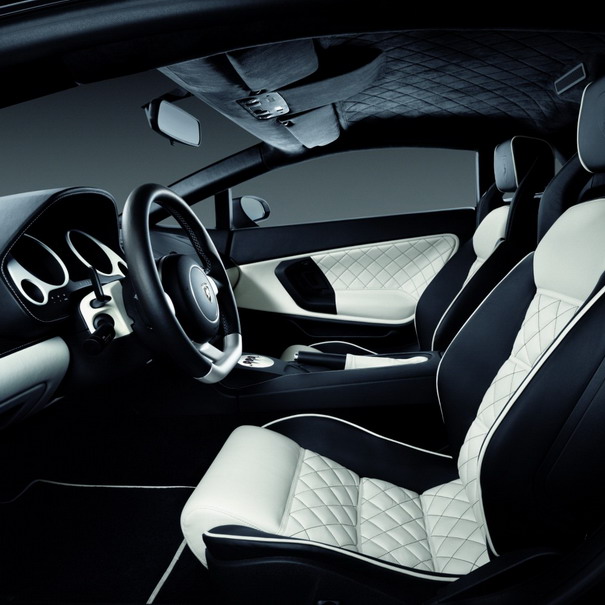
The Luxuries Lamborgini Reventon Pictures

2007 Lamborgini Reventon Specification and Pictures


Lamborgini Reventon Specification :
Chasis :
Brakes F/R: ABS, vented disc/vented disc
Tires F-R: 245/35 ZR18 - 335/30 ZR18
Driveline: All Wheel Drive

Engine :
Type: V12
Displacement cu in (cc): 396 (6496)
Power bhp (kW) at RPM: 650(478) / 8000
Torque lb-ft (Nm) at RPM: 487(660) / 6000
Redline at RPM: n.a.

Exterior:
Length × Width × Height in: 185 × 81 × 44.7
Weight lb (kg): 3671 (1665)

Performance :
Acceleration 0-60 mph s: 3.3
Top Speed mph (km/h): 211 (340)
Fuel Economy EPA city/highway mpg (l/100 km): n.a. (21.3)


The Lamborghini Reventón (Spanish pronunciation: [ɾeβenˈton]) is a mid-engined sports car that debuted at the 2007 Frankfurt Auto Show. It ranks as the most powerful and expensive Lamborghini road car to date, costing one million euros.[1] The official press release stated that only 20 vehicles would be released to the public,[2] with a single car (0/20) produced for the Lamborghini Museum.[3] Although early rumours indicated the total number would actually be 100,[2][4][5][6] each Reventón is clearly stamped with its number in the sequence of 20 between the drivers and passengers seats.

Although the exterior is all new,[2] almost all the mechanical elements (including the engine) are taken directly from the Murciélago LP640.[7] According to the official press release, the exterior styling was inspired by "the fastest airplanes".[8] To emphasize this, Lamborghini staged a race between a Reventón and a Panavia Tornado fighter plane.

BMW Li 7750Li 尊贵型 氢能


BMW Li 7750Li

BMW Li 7750Li

BMW Li 7750Li

BMW Li 7750Li

BMW Li 7750Li

BMW Li 7750Li

2010 Mercedes-Benz E63 AMG Sports Sedan Debut


AMG is kicking-off the 2009 driving season with a new superstar: shortly after the launch of the new E-Class, the AMG high-performance brand of Mercedes-Benz Cars presents the new 2010 E63 AMG.

This dynamic sports sedan impresses with outstanding performance, thrilling handling characteristics and advanced technology transferred from its sibling, the SL63 AMG high-performance Roadster. The E63 AMG makes its U.S. sales debut in November 2009.

The new E63 AMG distinguishes itself from the standard Mercedes-Benz E-Class sedans with a newly developed AMG RIDE CONTROL sports suspension with electronically controlled damping, revised front suspension and unique exterior and interior design.

At the same time, Mercedes-AMG has achieved a significant reduction in fuel consumption of almost twelve percent for the new E63 AMG, thanks to the precise application of several fuel efficiency improvements. With its unique combination of pioneering driver assistance systems, the E63 AMG further consolidates the brand's leading position in the field of automotive safety.

The AMG 6.3-liter V8-engine in the new E63 AMG develops an output of 518 hp and a 465 lb-ft of torque, matching the outstanding figures for the SL63 AMG. The high-performance Roadster has also transferred its AMG SPEEDSHIFT MCT 7-speed sports transmission to the new model. This transmission replaces the conventional torque converter through the use of a multi-disc wet start-up clutch. In conjunction with the four individual driving modes, rev-matched shifts and RACE START function, the resulting, direct connection to the powertrain delivers an extremely emotional and high-performance driving experience.

The AMG MCT drive unit is unique in this segment, and provides dramatic performance figures: the E63 AMG accelerates from standstill to 60 mph in just 4.4 seconds, with a top speed of 155 mph (electronically limited). The fast-revving, naturally aspirated engine with a displacement of 6208 cc impresses with its agile responsiveness, muscular power delivery and high redline. The AMG V8 sound is a thrilling partner for mile after mile, while the smooth-running engine guarantees renowned Mercedes long-distance comfort. A newly designed water cooling system ensures maximum endurance even under the enormous dynamic stresses of the racetrack.

Fuel consumption cut by almost twelve percent
Despite 11 hp of additional output versus the preceding model, the E63 AMG showcases several advancements designed to improve fuel efficiency, including on-demand delivery of fuel and alternator management with recuperation of engine power during overrun. In-engine friction is also reduced by the AMG-exclusive twin-wire arc spray coating process used to coat cylinder walls.

The AMG SPEEDSHIFT MCT 7-speed sports transmission also makes a decisive contribution to fuel economy: a multi-disc wet clutch running in an oil bath replaces the previous torque converter. This unit responds extremely rapidly, directly and without the losses typical of a torque converter transmission thanks to its low rotational inertia.

The transmission is equipped with four driving modes: "C" (Controlled Efficiency), "S" (Sport), "S+" (Sport plus) and "M" (Manual), which can be selected using a rotary electronic switch in the AMG DRIVE UNIT. Partial suppression of individual cylinders by interrupting ignition and injection during gearshifts under full load contributes to considerably faster shift times. In M mode the AMG SPEEDSHIFT MCT 7-speed sports transmission allows gearshifts to be performed in 100 milliseconds.

In the even more fuel-efficient driving mode Controlled Efficiency, the transmission shifts the gears with deliberate smoothness, and the transmission control unit is programmed to perform early upshifts to keep engine speeds as low as possible.

At the same time, the AMG SPEEDSHIFT MCT 7-speed sports transmission met the most demanding requirements where driving dynamics are concerned: fast and precise multiple downshifts ensure first-class agility in conjunction with the automatic rev-matching and RACE START function: this enables the E63 AMG driver to call on the maximum acceleration potential automatically.

Electronically controlled damping system and a new front axle
Sporty or more comfort-oriented? The driver of the new Mercedes-Benz E63 AMG is not obliged to accept any compromises in this respect. The AMG RIDE CONTROL sports suspension copes equally well with the dynamic cornering of the racetrack and more comfortable, sedate driving. High performance and typical Mercedes long-distance comfort go together as an extraordinary synthesis in the E63 AMG.

This is made possible by the newly developed AMG RIDE CONTROL sports suspension. While new steel spring struts are used on the front axle, the rear suspension features AMG-specific air springs. The advantage of this solution, which is exclusive to AMG, is that the front spring struts ensure more sensitive responses while the rear air struts with their automatic level control system keep the vehicle at a constant height, irrespective of the load.

A new, electronically controlled damping system automatically varies the damping characteristics according to the driving situation, reducing the roll angle of the body. The result is instant adjustment to provide the best possible ride comfort together with the greatest possible agility. In addition, the driver is able to choose between the three suspension modes of Comfort, Sport and Sport plus at the touch of a button.

The E63 AMG is also equipped with a newly developed, unique front axle with a 2.2 inch (56 millimeter) wider track, a tubular stabilizer bar, new control arms, new wheel bearings, newly-designed bushing geometry and kinematics and new wheel location for more negative camber – thereby providing more grip when taking turns at speed.

The AMG-specific kinematics also ensures significantly more precision. This is a highly sophisticated axle design whose principle has already proved its worth in the C63 AMG. The rear axle likewise has more negative camber, optimized elastokinematics and a new subframe mounting for greater stability at the physical limits.

Newly developed power steering and individual 3-stage ESP®

For more direct responsiveness, the speed-sensitive rack-and-pinion steering is also a new development. The steering ratio of 14 : 1 is 22 percent more direct (quicker) than in the standard production models, while a more rigid steering column plus the reconfigured characteristic mapping of the speed-sensitive servo assistance ensure better steering precision and improved road contact.

The 3-stage ESP® familiar from the SL63 AMG and C63 AMG enables individual settings to be selected – with clear benefits in terms of driving pleasure combined with the same high level of handling safety. The ESP® key in the AMG DRIVE UNIT allows the driver to choose between "ESP ON", "ESP SPORT" and "ESP OFF" – with the currently active mode shown in the central display of the AMG instrument cluster.

Perfect deceleration even during performance driving is ensured by the AMG high-performance braking system with 14.2 inch, internally ventilated and perforated brake discs all-round. Particularly resistant, motorsports-tested compound (two-piece) construction technology is used at the front axle. Outstanding grip is ensured by the 18-inch AMG light-alloy wheels with a width of 9 and 9.5 inches and mixed tire sizes of 255/40 R 18 at the front and 285/35 R 18 at the rear.

Decidedly dynamic interior and exterior
The purposefully dynamic design of the E63 AMG is fully in keeping with the vehicle's impressive technology. The front aspect is characterized by 17-millimeter wider fenders bearing "6.3 AMG" lettering, the new AMG front apron with large intake air apertures and the AMG-specific daytime driving lights in LED technology. In conjunction with the optional Bi-Xenon Headlamps with Active Curve Illumination, the E63 AMG is equipped with tinted main headlamps.

The striking visual presence is further enhanced by the AMG side skirts and AMG rear apron with a black diffuser insert. As a hallmark of the brand, the AMG sports exhaust system has two newly designed, chrome-plated twin tailpipes.

The new interior of the E63 AMG is an exciting blend of high-grade materials and functional sportiness. Exclusive features include electrically adjustable AMG sports seats with improved lateral support and the AMG sports steering wheel in a four-spoke design with AMG shift paddles.

As a completely new feature exclusive to the E63 AMG, the AMG selector lever has one-touch logic. Directly adjacent to it in the center console is the AMG DRIVE UNIT, which provides adjustments for the MCT sports transmission, the ESP functions, the suspension setup and the AMG driving modes. Standard equipment also includes high-grade leather upholstery in three different colors, the AMG instrument cluster with an AMG main menu, door entry sills with AMG lettering and a sports pedal cluster – both in brushed stainless steel.


Even more individuality with tailor-made AMG extras
Customers can select the optional AMG Performance Package, which includes the following:
• Lightweight, forged 19-inch AMG light-alloy wheels with size 255/35 R 19 tires at the front and 285/30 R 19 at the rear
• AMG Performance suspension with stiffer spring rates
• AMG rear axle locking differential with 40 percent locking action
• AMG Performance steering wheel in a three-spoke design
• Top speed raised to 186 mph

Active and passive safety at a new level
The E63 AMG traditionally meets the very highest expectations with respect to active and passive safety. Standard features include the new drowsiness detection system ATTENTION ASSIST, the unique preventive occupant protection system PRE-SAFE®, Brake Assist PLUS, eleven airbags and crash-responsive NECK-PRO head restraints. Optional safety features can bring the vehicle to a level unprecedented in this class with Lane Keeping Assist and Blind Spot Assist systems, the PRE-SAFE® Brake with an automatic emergency braking function, Adaptive High Beam Assist and Night View Assist PLUS.

Wednesday, April 1, 2009

Sydney Motorshow 2006 Audi R8 2006 Audi R8 Pictures


2006, Audi, launch, MotorShow, new, R8, Red, side, silver, Sydney
2006 Aoudi R8:Pictures, Images, Photo's. The Audi R8 is a mid-engined sports car introduced by the German automaker Audi in 2006, appearing at auto shows and events all over the world. The R8 is based on the Audi Space Frame, which contributes to the car's relatively light weight. It is built by Audi AG's wholly owned private subsidiary company, quattro GmbH