Find one of the largest information about Styling Cars, to increase your Styling Cars here

Tuesday, November 3, 2009

[Super Cars] 2007 - Mazda CX-7

2007 Mazda CX-7 is one of the hottest supercars, The all-new Mazda CX-7 supercar is the first of three Mazda vehicles that are being designed and engineered specifically for the North American supercars market. Mazda North American Operations (MNAO) today announced details of its much-anticipated upcoming 2007 Mazda CX-7 crossover sport-utility vehicle (SUV). The company also confirmed that the car will make its public debut at the upcoming Greater Los Angeles Auto Show here, and the North American International Auto Show in Detroit in January 2006.

Mazda's new five-seat CX-7 is a refreshing departure from the fleet of traditional SUV's currently plying American roads. Produced on entirely Mazda-derived platform architecture, Mazda CX-7 embodies an astute blend of sports car verve and SUV practicality, resulting in a fun-to-drive SUV with Mazda's trade
mark "Soul of a Sportscar".

It is a vehicle that brings together performance and design like never before. The Mazda CX-7 is just right for adventurous couples driven by the urge for discovery. "The North American market continues to play a pivotal role in Mazda Motor Corporatio n's global future," said Jim O'Sullivan, president and CE O, MNAO. "Vehicles such as CX-7 and others in the pipeline, designed and en gineered specifically for the North American market, will make Mazda an important and influential force in the industry. This vehicle represents everything a Mazda SUV should be: powerful, great styling, detailed craftsmanship and fun to drive. Mazda at its finest". The distinctive exterior design of the Mazda CX-7 is an extension of the sports car motif from the 2005 MX-Crossport concept and the RX-01 concept introduced in 1995 and carries over much of the strong styling emotion brought on by Mazda's current RX-8 sports car as well. Prominent front fenders, A-pillars rooted at the body's leading edge, and Mazda's signature five-pointed grille clearly register this new model as a Mazda.

The eighteen-inch aluminum wheels and tires proclaim Mazda CX-7's Zoom-Zoom intentions and immediately signal that this is a vehicle built for drivers. An interior design, also previewed by the MX-Crossport concept, fulfills every car enthusiast's innate desire to jump in and drive. The three-dial instrument cluster, sports car inspired high-mounted shifter, and firm-fitting front bucket seats are configured for spirited motoring. The instrument panel consists of a unique 'double-roof' structure, in which a small 'roof' over the meter cluster is positioned just in front of a large 'roof' that extends across the entire instrument panel. The 60-40 split rear seat accommodates three people in comfort and quickly converts to an extension of the 29.9-cu. ft. cargo hold, bringing capacity up to 58.6-cu. ft. The 39-inch-long rear compartment (seats up) offers more stowage space than some larger SUVs. Matching the sporty appearance is Mazda CX-7's powerful and dynamic performance.

Mazda CX-7 is powered by a turbocharged and intercooled 2.3-liter four-cylinder direct-injection gasoline engine that produces a hearty 244 horsepower at 5,000 rpm. While key powertrain features are shared with the recently launched MAZDASPEED6, the Mazda CX-7 is exclusively tuned to deliver 258 lb-ft of torque at a remarkably low 2,500 rpm for healthy throttle response. With Mazda's six-speed Sport AT transmission and at least 99-percent of the maximum torque available all the way to 5,000 rpm where peak horsepower is delivered, Mazda CX-7 performs as if there's an engine twice the size under the hood.

Furthermore, the Mazda CX-7 is estimated to deliver over 23 mpg in combined driving.
A sturdy unitized body structure, fully independent suspension, and four-wheel ventilated disc brakes with standard four-wheel Anti-lock Braking System (ABS), Dynamic Stability Control (DSC) and Traction Control System (TCS), underlie Mazda CX-7's athletic road manners.

Customers may select the driveline best suited to their needs: Front-Wheel Drive or Mazda's Active Torque-Split All-Wheel Drive.
With Active Torque-Split All-Wheel Drive, a computer controlled coupling feeds up to 50-percent of the engine's torque to the rear wheels for exceptional handling whether the driving conditions are dry and fast or slippery and paced.
Mazda CX-7 arrives in the spring of 2006 as 2007 supercars model.


--
Posted By tyson9500 to Super Cars at 11/03/2009 01:00:00 AM

[CARS-MANIA] Fiat Croma 2008

Fiat Croma Fiat Croma is the Station Wagon from Fiat, designed for people with very different needs, taste and life styles, but who all share one thing: they want their car to be comfortable. And for people who also want exciting performance, the Croma offers the powerful 200 bhp 2.4 Multijet engine (combined with a 6-speed automatic sequential gearbox), which tops its class for specific power: 83 bhp/litre. The supercar comes with two sparkling petrol engines (140 bhp 1.8 16v and 147 bhp 2.2 16v, the latter not available in Italy) and three Multijet turbodiesels (120 or 150 bhp 1.9 and 200 bhp 2.4) which reiterate Fiat Group Automobiles' superiority in the field of diesel engines.

(From Fiat Press Release)
The new Fiat Croma makes its debut, the Station Wagon as Fiat sees it, a car full of innovation and substance, with new styling and a more rational range. It can boast both second generation Multijet engines and a lavish array of comfort, safety and infotainment equipment.

The new Fiat Croma is a benchmark for its segment, with an amazingly roomy interior, and an excellent level of 'well-being on board' however long your journey is, thanks to equipment worthy of a flagship that is now the standard outfit, and above all for the original 'styling' formula inherited from the previous model - the 'Comfort Wagon' concept - that makes it, once more, the roomiest car in its segment.

With its even more dynamic look, the new Fiat Croma immediately communicates a new approach to the car. It was designed to meet the needs of European society, where there is a growing trend among 'new families' (young families with children) to pay more attention to substance, and to demand safety and reliability from the family car: all at an accessible price. Which is why the new model is ideal for people who need space, practicality and low running costs during the week for professional reasons, and demand a good-looking, comfortable, safe station wagon for their free time, to that they can travel with the whole family in complete peace of mind.

Revamped dynamic exterior styling. With its elegant, distinctive styling, the new Fiat Croma is even more dynamic thanks to a number of styling changes introduced by the Fiat Style Centre. To start with, consistent with the Fiat 'family feeling' introduced with the Grande Punto and reiterated on the Bravo, the front of the new Fiat Croma features original drop-shaped headlights with distinctive Italian styling, highlighted by a stylish burnished finish; the design of the front air inlet and the grille with its wide links and Crome Shadow painting, is also new.

There is a new rear bumper, very similar to an air extractor, which gives the car a sportier look, and the same dynamism conveyed in the side view by the new light clusters, together with the wings, rear spoiler and new sideskirts. Last but not least, the model's elegant look is underlined by the combination of polished black pillars with new chrome detailing on the window frames and rubbing strips.

The interior of the car has also received a number of styling changes that underline the typically Italian refinement (new cloth or leather upholstery for the seats and an original Wenghe-effect treatment of the mouldings) as well as a new steering wheel and a richer, more elegant instrument panel.

Class-beating access and roominess. The new Fiat Croma is available with one bodywork version, which is one of the roomiest in its class; 478 centimetres long, 177 wide, 160 tall, and with a wheelbase of 270 cm, measurements that translate into an extraordinary amount of space inside.

The model's distinguishing features are the generous amount of headroom for passengers, and the space between the seats (the best in its category), while the raised driving position guarantees excellent control over the road and better exterior visibility, even for rear passengers.

Thanks to the flat floor and the raised front and rear H points, it is extremely easy to get in and out of the car. What is more, the new model has one of the largest glazed areas in its market bracket (3.254 m2), and guarantees excellent acoustic and vibrational comfort, thanks to painstaking analysis of the passenger compartment and specific suspension calibration.

Another strong point of the new Fiat Croma is the modular luggage compartment with its loading volume of 500 litres that becomes 1,610 litres up to the roof with the rear seats folded down. The luggage compartment is fitted with a practical Cargo box system that exploits all the available space: a removable shelf the same size as the luggage compartment that creates a continuous floor, level with the bumper ledge, to simplify loading and unloading. It also acts as a cover for a lower storage area 16 centimetres high, where fragile or valuable items can be stowed away from prying eyes. The lid of the cargo box can also be stored on the bottom of the well to increase loading capacity.

Exclusive equipment and solutions to travel in maximum comfort. The raised driving position and ergonomic controls make travelling in the new Fiat Croma particularly enjoyable. And there are numerous exclusive accoutrements to choose from: a brand new DVD player, the Blue&Me™ system (also available in the NAV version), the 'Interscope Sound System' Hi-Fi and CONNECT Nav Plus. The new Fiat Croma also proposes the best the market can offer in terms of automatic devices that help to reduce the fatigue of driving, for example Cruise Control, a rain sensor, parking sensor, tyre pressure sensor and Follow-me-home headlights that stay on for a few seconds. We should also mention the 'adaptive cornering' function of the front foglights, that are activated automatically with the dipped beams on the basis of the steering angle.

And finally, to raise the level of comfort even higher, the new Fiat Croma adopts a reliable, tried and tested suspension system, with MacPherson struts at the front and Multilink suspension at the rear, tyres designed specifically to enhance comfort and safety, and electro-hydraulic power steering that makes all manoeuvres more comfortable.

Powerful, elastic engines that respect the environment. Original outside, spacious and quiet inside. The new Fiat Croma is the Station Wagon from Fiat, designed for people with very different needs, taste and life styles, but who all share one thing: they want their car to be comfortable. And for people who also want exciting performance, the Croma offers the powerful 200 bhp 2.4 Multijet engine (combined with a 6-speed automatic sequential gearbox), which tops its class for specific power: 83 bhp/litre.

The new Fiat Croma comes with two sparkling petrol engines (140 bhp 1.8 16v and 147 bhp 2.2 16v, the latter not available in Italy) and three Multijet turbodiesels (120 or 150 bhp 1.9 and 200 bhp 2.4) which reiterate Fiat Group Automobiles' superiority in the field of diesel engines. All the engines meet EU Stage 4 emission standards, and the diesel units are fitted with particulate filters. They are offered with 5 different gearboxes that exploit the engine performance in full; all the petrol engines are combined with 5-speed transmissions, with the option of sequential automatic transmission on the 2.2 16v, and all the diesel engines have 6-speed gearboxes (the sequential automatic unit is offered as an alternative on the 150 bhp 1.9 Multijet, and as the standard unit on the powerful 200 bhp 2.4 Multijet 20v).

Class-beating safety. The new Fiat Croma was designed and built to achieve the highest safety standards, and has been awarded the prestigious five-star NCAP rating that puts it at the top of its class, thanks to an array of sophisticated devices that are standard equipment on the model, starting from passive safety features such as: 2 'dual stage' frontal airbags, 2 side airbags at the front, 2 curtain-bags and a knee-bag for the driver (rear sidebags are available on request).

The new Fiat Station Wagon behaves predictably at all times, thanks to the sophisticated electronic devices it incorporates to control dynamic behaviour: from braking to drive. They include ABS with EBD (Electronic Brake force Distribution) and, above all, ESP (Electronic Stability Program) which is standard throughout the range. The ESP on the new Fiat Croma incorporates a number of additional features: ASR (Anti Slip Regulation) which limits drive wheel slippage when road grip is poor; MSR (Motor Schleppmoment Regelung) which intervenes if the driver changes down too abruptly, to return torque to the engine and prevent excessive dragging of the drive wheels; HBA (Hydraulic Brake Assistance), electro-hydraulic brake assistance, which automatically intervenes during panic braking; and finally, the Hill-holder that helps the driver on hill starts.

A broad, comprehensive range for a car of 'substance'. The new Fiat Croma is a car of substance that comes in an extremely comprehensive range. Different solutions are offered on different markets, but they all offer the same value for money. In Italy, for example, the range includes a choice of 4 engines (the 2.2 petrol engine is not available), 5 outfits (Classic, Active, Dynamic, Emotion and Must), 10 bodywork colours, and 4 interior environments, available in a choice of cloth, Castiglio and two types of leather.

We must not forget that the new Fiat Croma range offers every customer, no matter how demanding, a choice between different options and accessories which may underline the model's practicality and versatility, or cater for the customer's practical and emotional demands. The new Fiat Croma is perfect not only for the modern family, but also for businesses and professionals. And as a result, Fiat Automobiles Financial Services proposes a range of purchasing solutions and use formulae aimed specifically at these customers.


--
Posted By tyson9500 to CARS-MANIA at 11/03/2009 01:00:00 AM

[Super Cars] Porsche 911 997 | Turbo Cabriolet 2008 Supercar

Porsche 911 997 Turbo Cabriolet is a fast and powerful supercar with Twin-Turbo Flat-6 engine. This car has 480 bhp power and top speed 193 mph (310km/h). It can accelerate 0-62 mphs in 3.6 seconds. The six-cylinder fixed-brake caliper up front stems from the Porsche Carrera GT. Upon request, the race-proven and light Porsche Ceramic Composite Brake (PCCB) ceramic brake system is also available for the 911 Turbo Cabriolet.

(From Porsche Press Release)
Dr.Ing. h.c. F. Porsche AG, Stuttgart, Germany, will be sending the new 911 Turbo Cabriolet to the starting line on September 8. The 20-year tradition within the 911 Series of the 911 Turbo with a classic soft top is continued with this open top model. Firstly, the open 2+2 seater offers the driving performance of a high-performance sports car while still providing convertible driving pleasure. Secondly, compared to the competition the 911 Turbo Cabriolet is economical in its fuel consumption, thanks to its deliberate design, outstanding aerodynamics and advanced engine technology

As with the 911 Turbo Coupe, the Cabriolet will also be powered by a 3.6 liter six-cylinder boxer engine with biturbo turbocharging and Variable Turbine Geometry (VTG). The powerplant already generates 480 hp (353 kW) and 620 Nm of torque at 1950 rpm. With the new, optional Sport Chrono Turbo Package, which includes an overboost function, up to 680 Nm is even intermittently possible. The manual transmission version can accelerate from 0 to 100 km/h in just four seconds. With Tiptronic S the time can be cut to 3.8 seconds. Both versions can reach speeds of up to 310 km/h. Fuel consumption for the 911 Turbo Cabriolet is 12.9 liters per 100 kilometers an exemplary value in the competitive environment.

In spite of the convertible-specific reinforcement of the chassis and automatic and the extendable rollover protection behind the rear seats, the open version of the 911 Turbo only weighs 70 kilos more than the Coup. The light, three-layer soft top, which can completely automatically be opened or closed in roughly 20 seconds, enables a low balance point.

Together with the running gear that is tuned to convertible-specific needs, which includes the active suspension system Porsche Active Suspension Management (PASM) as standard equipment, the new 911 Turbo Cabriolet offers the sporting driving performance typical for a Porsche 911 as well as extremely high driving safety together with appealing driving characteristics. The driving stability control Porsche Stability Management (PSM) and the managed all-wheel drive Porsche Traction Management (PTM) also contribute to its uncommon performance. The system with an electronically controlled multi-plate clutch can, according to the requirements, alternatively shift the drive output from the engine between the front and rear axles, and with shift intervals of a maximum of 100 milliseconds quicker than the reaction of the engine to load changes.

With a drag coefficient of Cw=0.31, the 911 Turbo Cabriolet travels at the level of the coup models. Together with the rear spoiler, which automatically extends at speeds from 120 km/h extending 30 mm further than with the Coup, the vehicle is the only standard series convertible that generates negative lift at the rear axle. Along with its passive safety systems, including six airbags as standard equipment and the comprehensive rollover protection system with steel tubing integrated into the windshield frame and an extendable rollover protection behind the rear seats the 911 Turbo Cabriolet also fulfils all legal requirements for passive safety applicable in the worldwide sales markets. Furthermore, it is equipped with one the most high-performance brake systems. The six-cylinder fixed-brake caliper up front stems from the Porsche Carrera GT. Upon request, the race-proven and light Porsche Ceramic Composite Brake (PCCB) ceramic brake system is also available for the 911 Turbo Cabriolet.

Also included in the extensive standard series equipment of the 911 Turbo Cabriolet are Bi-Xenon headlights, 19 inch forged wheels with two-tone appearance, an air conditioner, the wind deflector, the Porsche Communication Management (PCM) with the navigation module and 5.8 inch color monitor and the Bose Surround Sound System, among other things. The basic price in euro for the Turbo Cabriolet is EUR 126,600. In Germany the price is EUR 150,862 (including VAT and country-specific requirements).


--
Posted By tyson9500 to Super Cars at 11/03/2009 01:00:00 AM

Monday, November 2, 2009

Eco labels launched for used cars (UK)


First used on brand-new cars and now launched on used cars. A new 'green' labelling system for used cars has been launched with the support of over 2,000 dealers. The colour-coded system is similar to the one already applied to new cars, with the labels making it easy for buyers to tell how economical the car is.

The label gives details of a car's make and model, as well as:

• The car's CO2 emissions in grams per kilometre

• The official mpg figure

• The estimated fuel cost based on 12,000 miles driving

More economical cars are distinguished with green labels while cars with high fuel consumption and CO2 emissions get red labels.

Dealers that sign up for the scheme can choose whether to label cars up to two years old or whether to label cars that have been registered since 2001, when the modern scheme of CO2 banding was first introduced.

However, 94% of participating dealers have opted to label old cars, too. Minister for Transport, Sadiq Khan MP, said: 'I hope as many dealers as possible will participate and I encourage used car buyers to look for the label when they consider what to buy.'

From its launch over 2,000 garages have signed up to the scheme including franchised dealers, independent garages and car supermarkets. Over 200 Ford Direct centres are using the label, however, Ford plans that all 350 members of its franchised network to sign up as soon as possible.

Previous tax band table shown above

RHD Polos have higher CO2 emissions than LHD Polos (UK)


Right-hand-drive Volkswagen Polo diesels will have slightly poorer fuel economy and higher CO2 emissions than the left-hand-drive models sold in Mainland Europe.

This is because the oxidation catalyst and diesel particulate filter in the exhaust system have been moved to allow the controls to be switched to the right side of the car. The switch means that the 1.2 litre Polo Bluemotion, which has the lowest CO2 figure of any diesel car on sale in Europe at 87g/km, can't make the same claim in the UK.

The Polo's emissions in the UK are 90g/km, while fuel economy dips from 85.6mpg to 83.1mpg. The two 1.6 litre Polo diesels (74bhp and 89bhp) are also 3g/km worse off in right-hand-drive form, while the official fuel consumption figure falls from 67.3mpg to 65.7mpg. The Polo CO2 emissions in the UK are 112g/km, compared to 109g/km for Mainland Europe.

The good news is that both road tax and company car tax are unaffected by the right-hand-drive car's drop in efficiency – it's not significant enough to move the Polos up a tax band.

Other VWs are not affected by the transformation from left to right-hand drive because there is more bonnet space under the hood to re-route the controls.

2 Door Lamborghini Galladro 2009


Lamborghini Galladro
MSRP: $198,000 - $198,000

The 2009 Lamborghini Gallardo LP560-4 gives auto writers from across the Web—and the editors of TheCarConnection.com—the chance to exercise some vocabulary to describe its fantastic, outrageous shape.

The “first model completely designed under the watchful and sensible eye of Audi,” Motor Authority reports, the newest version of the Gallardo is “more in to line with the Murcielago and recent Reventon concept. You can clearly see the family resemblance in the new model with giant air dams and new lights in the front.” It’s “more aggressive and more elegant than before,” Car and Driver says, with “a bit more of a chin,” “LED daytime running lights,” and “smoothed and filled” body surfaces that replace the “dozens of gills on the original Gallardo.” Motor Trend exclaims, “Behind the cosmetically reshaped nose, between the all new Y-styled, LED head and taillights, is a vehicle truly worthy of such an affected alphanumeric name.” It’s plainly “sexier than ever,” Popular Mechanics says succinctly.

Moving to the rear of the car, Edmunds observes that the Gallardo “displays a raging V10 engine under a hatch that's inset with glass.” The rear end’s been updated, Motor Authority reports, “with cooling vents, new rear lights and bumper plus a redesigned diffuser all contributing to its changed appearance.” They also note the Gallardo’s newfound resemblance to its corporate cousins: “In what may be a subconscious nod to its German cousin, the LP560-4’s rear looks a little like the Audi R8’s.”

The 2009 Gallardo’s cabin sports “a purposeful cabin that can be outfitted with leather, Alcantara or carbon-fiber accents,” Popular Mechanics says. “The familiar Audi-sourced nav system and A/C controls are easy to use, and the tach's 8500 rpm redline is one of the few clues to the outrageous side of this Lambo's personality.”

TheCarConnection.com spent a day at the racetrack in Las Vegas with the latest Lamborghini and got familiar with its sleek strakes, curves, and stunning proportions. The newest flavor of the Gallardo certainly looks more refined than the version that’s been plying streets and road courses the past few years, but it’s still supercar all the way, sporting a deep flying wedge updated with new details like those LED running lights. More than the latest generation of Ferraris, the latest Lambos look like outrageous performers—and the “entry-level” Gallardo LP560-4 is far more cutting edge than the bulbous Porsche 911 and the more reserved Aston Martin V8 Vantage.

Sportage Kia


Kia Sportage 1999.

MSRP: $13,995 - $19,595
pretty well, don’t you think? " yelled Darren’s voice through my helmet’s radio. "She" was the Kia Sportage race car that was taking us on a run for the money in "The Richest Off-Road Race in Nevada." The "small ones" were the lesser, but numbingly continuous, bumps and grinds along this 250-mile off-road course that ran parallel to Death Valley. The "big ones," by contrast, were ridges and drop-offs that sent us airborne, often followed by a rush of sagebrush and dust that rained into the cockpit through the glass-less windshield.

Typically, in backcountry driving, this rugged terrain would be traversed at slow speed. But this was a race, in fact, the last race of the Best of the Desert Series, called the "Terrible’s Town 250," and Skilton wanted to win. With the two of us held taut in our five-point harnesses, the majestic views and desert terrain went past at speeds that reached nearly 90 mph.

A combination of the Kia’s 104-inch wheelbase, 60-inch track, impressive angles of approach and departure, and supple suspension made this everyday SUV turned race car a dazzling dame at "eating up" the bumps. Ride comfort was a bonus for Skilton. But what really mattered were the Kia’s 185 horses channeled through a five-speed transmission with a 2WD and 4WD box. The combination is a competitive off-road vehicle that Skilton has driven to a number of victories over the past few years.

2008 Jeep Wrangler


Jeep Wrangler 2008.

MSRP: $19,505 - $30,240

The 2008 Jeep Wrangler still maintains its stylish appeal for off-road fans. Two versions are offered—a two-door and a four-door model—and both soft and hard convertible tops are available.

Luckily for truly devoted fans of the Jeep, 2008 doesn’t change much. The Wrangler was completely redesigned in 2007, and most reviewers come down in favor of the Wrangler's style, which maintains traditional Jeep styling cues while still essentially being, as Car and Driver notes, a “cult vehicle.” Edmunds says the "2008 Jeep Wrangler firmly maintains its heritage, image and off-road ability while also being more refined." It’s also “larger and more refined” than the last-generation Wrangler Jeep, they add. Automobile notes some details that disguise the Wrangler’s gains in size: “Black plastic fender flares in place of body-color flares help disguise the fact that the Wrangler is nearly half a foot wider overall,” they write.

Styling is mostly “familiar,” Edmunds remarks. The new four-door, however, brings a new silhouette to the world; it “inhabits its own new market niche: the four-door convertible,” Automobile says. USAToday thinks it’s "fancy and genteel by Wrangler standards," while Cars.com calls it "refined and masculine," and Edmunds, “strangely attractive.” Cars.com says that now, with the extra two doors, "You could almost call it a civilized design."

The 2008 Jeep Wrangler’s cabin is no pleasure palace—and it’s in tune with the rugged exterior. Especially with the Wrangler, “Jeep interiors aren't the top of the class. They often feature too many bulky plastic surfaces, but considering the rugged nature of the Wrangler, we'll give them a pass,” Cars.com says.

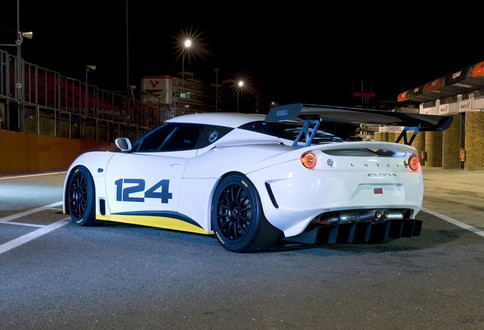
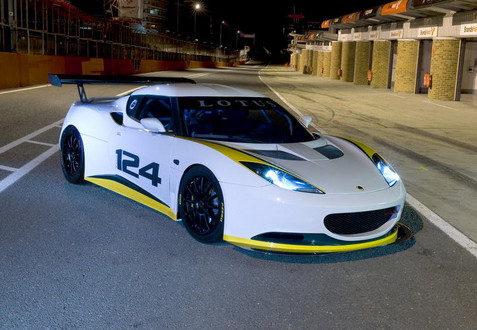
2010 Lotus Evora Type 124 Endurance Racer Pictures


The new Lotus Type 124 Evora endurance racer may be the most luxurious Lotus cars. The Lotus Evora Type 124 Endurance Racecar has been developed from the award-winning Evora road car and is built to FIA regulations and safety standards. The engine hasn't changed -- it's still a Toyota-sourced 3.5-liter V-6 -- but its power has. Lotus says in Type 124, the six-cylinder can produce as much as 400 hp. Lotus replaced the standard six-speed sequential gearbox with a normal six-speed manual transmission.The Evora Type 124 will make its debut at the 2010 ADAC Nrburgring 24 Hours in May, and will continue competing at a number of various endurance races through 2011 as part of a factory supported program.Finally this car is very luxury cars..

[CARS-MANIA] Fiat Grande Punto Abarth 2008

Fiat Grande Punto Abarth is creating a world all of its own, a world that revolves around the core values that led to its great success in decades gone by: innovative design, state-of-the-art materials, and love for detail. It will be on the market in Switzerland by the end of the year, and will also be available in other countries during the course of 2008.

(From Abarth Press Release)
A glorious past becomes the present, an all-conquering passion that is as strong today as it ever was: this is the inspiration behind Fiat Group Automobiles' plan to re-launch the Abarth name. Always synonymous with tough, spirited cars, challenges, passion and thrills, Abarth is back with a new range to whet the appetites of all sports car enthusiasts.

The novelty lies in the modern-day interpretation of everything that Abarth used to do in the past - starting with motor-racing, followed by prototypes and vehicle conversion kits, and even fashion accessories representing the Abarth style. An expression of the ultimate racing lifestyle, the new company will be active on several fronts: firstly, in the world of motorsport, an environment strictly related to competition, one-make trophies and cars prepared for private customers. Second, the commercial environment, including tuning - hence the production of conversion kits - not forgetting the extensive licensing and merchandising operations.

In short, Abarth is creating a world all of its own, a world that revolves around the core values that led to its great success in decades gone by: innovative design, state-of-the-art materials, and love for detail. Behind it all is an absolutely genuine passion for motoring, not to mention the company's human and technological assets, and the professional pride of the thousands of people - technicians, workers and executives - who have come and gone from the factories, offices and race tracks.

The target of Abarth's first project, later to be extended to other models, was the Grande Punto - on sale in Italy from September. It will be on the market in Switzerland by the end of the year, and will also be available in other countries during the course of 2008. There will hardly be time to draw breath between each launch: between now and the end of 2008, no less than four new product launches have been planned. The brand's development plans will force it to expand its production capability in the short term, and within a few months, Abarth's new home will have been completed at the Mirafiori plant. The new premises will group together the company's manufacturing, design and management divisions.

This fast pace explains the decision to give Abarth its own brand, managed by an independent company (Abarth & C. S.p.A., 100%-owned by Fiat Group Automobiles) whose distribution is entrusted to an exclusive commercial organisation covering four levels: flagship service centres, dealers, specialised tuners and workshops.

Agile and quick off the mark (in the best Abarth tradition), Abarth & C. S.p.A is in the hands of Chief Executive Officer Luca De Meo, and covers three areas of activity: Business Operations, Engineering & Manufacturing Operations and Racing Operations. The first division, led by Antonino Labate, has the task of designing the products and services for the customisation and tuning of standard sports cars, organising the sales and service network, and managing Abarth's merchandising and licensing operations.

The second area, Engineering & Manufacturing Operations, is headed by Paolo Ollino. He is responsible for technical development and production, together with the tuning and servicing of competition cars, and developing the car customisation and tuning products. The division works in partnership with the Engineering & Design division of Fiat Group Automobiles (led by Harald Wester).

Finally, the Racing Operations division, led by Claudio Berro, has the task of coordinating Abarth vehicles' entries in national and international motorsport competitions, organising the championships reserved for private customers, and managing relations with racing and rallying clients and sponsors.

Last but not least, Abarth can rely on the assistance of Paolo Martinelli, director of the Engine Division (Racing Operations) at Ferrari until October 2006, and currently head of the Petrol Engine Development Division at Fiat Powertrain Technologies.


--
Posted By tyson9500 to CARS-MANIA at 11/02/2009 03:36:00 AM